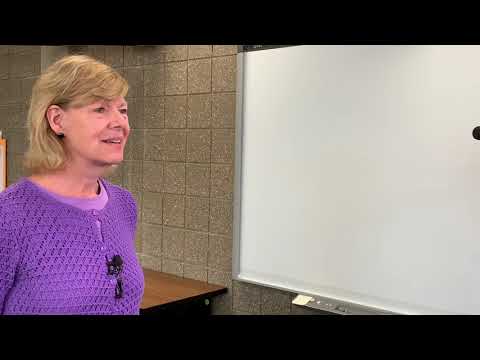
WAUSAU, WI (WSAU) — With an infrastructure vote coming up next week, one congressional representative is hearing from local Wisconsinites.
Congress returns from its Fourth of July recess next week and will get to work on discussing and trying to pass a Bipartisan Infrastructure Framework. Part of that infrastructure framework agreement includes $65 billion for broadband infrastructure, an issue that Marathon County has been working on for the past 15 years.
To get insight on what those issues have been in expanding broadband infrastructure in the area, Senator Tammy Baldwin held a roundtable with nearly a dozen people from various professions and areas around Marathon County. Those involved in the roundtable shared their frustrations and hope for broadband in the area that could be helped by the new infrastructure agreement.
Some of the problems shared by multiple roundtable members included a need for more accurate broadband maps, realistic timelines for broadband and broadband-related grants, and a lack of broadband options for rural areas outside of satellite or DSL service.
Baldwin says she wanted to hear from the people of Marathon County as the issues in Central Wisconsin with broadband represent many of the statewide issues with broadband. “It’s sort of a reflection of counties like Marathon County. We have a few really big cities in the state but most of our communities are smaller cities, smaller towns. That does cause complexities for getting broadband out to everyone.
“But you know, in our nation’s history, we decided that everybody should have electricity and there was a rural electrification that got the last mile to every home in our state and across the country. We had the ambition to have an interstate highway system and we made the investments necessary to make that a reality. Today we have an opportunity to work together to make an investment in getting broadband in every household and we need to do that.”
One change discussed during the roundtable was updating the Federal Communications Commission’s [FCC] current definition of broadband at 25 Megabits per second (Mbps) download and 3 Mbps upload, as the current definition doesn’t work for many. Baldwin says she would like to work with the Commerce Committee to work on updating that definition.
“So one of the ways is simply through the committee to ask those questions and ultimately to either formally urge them [FCC] to update their upload and download standards. Or if they don’t budge to introduce legislation that would require them to do that.”
Baldwin also hopes the infrastructure framework will lead to broadband being treated like a utility, as it has become a necessity for daily life. “It is something that is a necessity in our education system, in our healthcare system, and most importantly in our economy. And because the digital divide is most pronounced in rural areas, it is leaving rural America behind. And we can’t permit that.”
In Marathon County, a white-page report was put together by the Broadband Expansion Task Force with help from the UW-Extension. One of the main findings from the white page report includes that it would cost around $200 million to get broadband to every home in the county. The hope of those at the roundtable is that the new infrastructure framework will help cover some of those gaps.